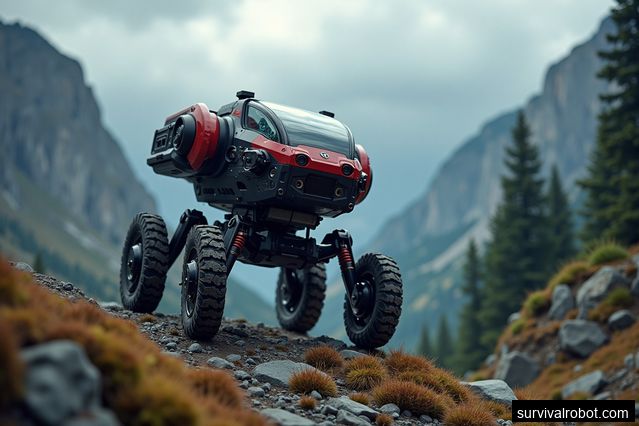
Enhancing Search-and-Rescue Capabilities
In recent years, the integration of artificial intelligence (AI) in search-and-rescue robotics has brought about a significant transformation in disaster response operations. By leveraging AI algorithms and machine learning techniques, these robots have become invaluable assets in locating and rescuing individuals in hazardous environments.
Improved Navigation and Mapping
One of the key benefits of AI integration is the enhanced navigation and mapping capabilities of search-and-rescue robots. These robots are equipped with advanced sensors and cameras, allowing them to create detailed maps of disaster sites and identify potential hazards. AI algorithms enable these robots to analyze and interpret the collected data, making intelligent decisions on the safest and most efficient routes to reach survivors.
Situational Awareness and Object Detection
Another crucial aspect of AI integration in search-and-rescue robotics is its ability to provide situational awareness and object detection. These robots can analyze live video feeds and images to identify survivors, distinguish between humans and debris, and detect signs of life. By leveraging deep learning algorithms, they can quickly process vast amounts of visual data, significantly reducing the time and effort required to locate and rescue individuals.
Intelligent Decision-Making in Hazardous Environments
AI integration enables search-and-rescue robots to make intelligent decisions in hazardous environments. These robots can assess the stability of structures, evaluate the risk of collapse, and determine the safest approach for both themselves and the survivors. By continuously analyzing data and adapting to changing conditions, AI-powered robots optimize their operations, improving the overall efficiency and effectiveness of search-and-rescue missions.
Collaboration and Swarm Robotics
AI integration has also facilitated collaboration and swarm robotics in search-and-rescue operations. By working together, a group of robots can cover a larger area, share information, and coordinate their actions to maximize the chances of locating survivors. AI algorithms enable efficient communication and task allocation among the robots, ensuring a synchronized and organized response.
Continual Learning and Adaptability
Furthermore, AI integration allows search-and-rescue robots to continually learn and adapt their behavior. Through reinforcement learning techniques, these robots can improve their performance over time, learning from past experiences and adjusting their strategies accordingly. This continual learning ensures that the robots remain effective and efficient in future disaster scenarios.